Boudha Stupa: A Spiritual and Cultural Landmark of Nepal
Boudhanath Stupa, often simply referred to as Boudha, is one of the most iconic and revered landmarks of Nepal. Situated in the heart of the Kathmandu Valley, this magnificent structure is not only a symbol of Nepalese culture and history but also an important site for Buddhist pilgrims worldwide. With its towering dome, intricate mandala design, and constant presence of prayer flags fluttering in the wind, Boudhanath stands as a testament to the rich spiritual heritage of Nepal.
In this blog, we will take a closer look at the history, significance, architecture, and cultural impact of the Boudhanath Stupa. Whether you're a traveler, a spiritual seeker, or simply someone interested in learning more about this awe-inspiring monument, this blog will provide an in-depth understanding of Boudhanath's importance to both Nepal and the world.
The History of Boudhanath Stupa
Origins and Construction
The origins of Boudhanath Stupa are steeped in myth and legend. According to local folklore, the stupa was constructed during the 5th or 6th century, around the time of the Licchavi Dynasty.
The stupa’s historical significance is tied to the spread of Buddhism in the region. Nepal, which is geographically located between India and Tibet, has long been a crossroads for different Buddhist traditions, and Boudhanath Stupa stands as a monument to the fusion of Tibetan Buddhism and Nepalese culture. It is said that the stupa was built over the remains of a great Buddhist master, making it a powerful site of pilgrimage for devotees.
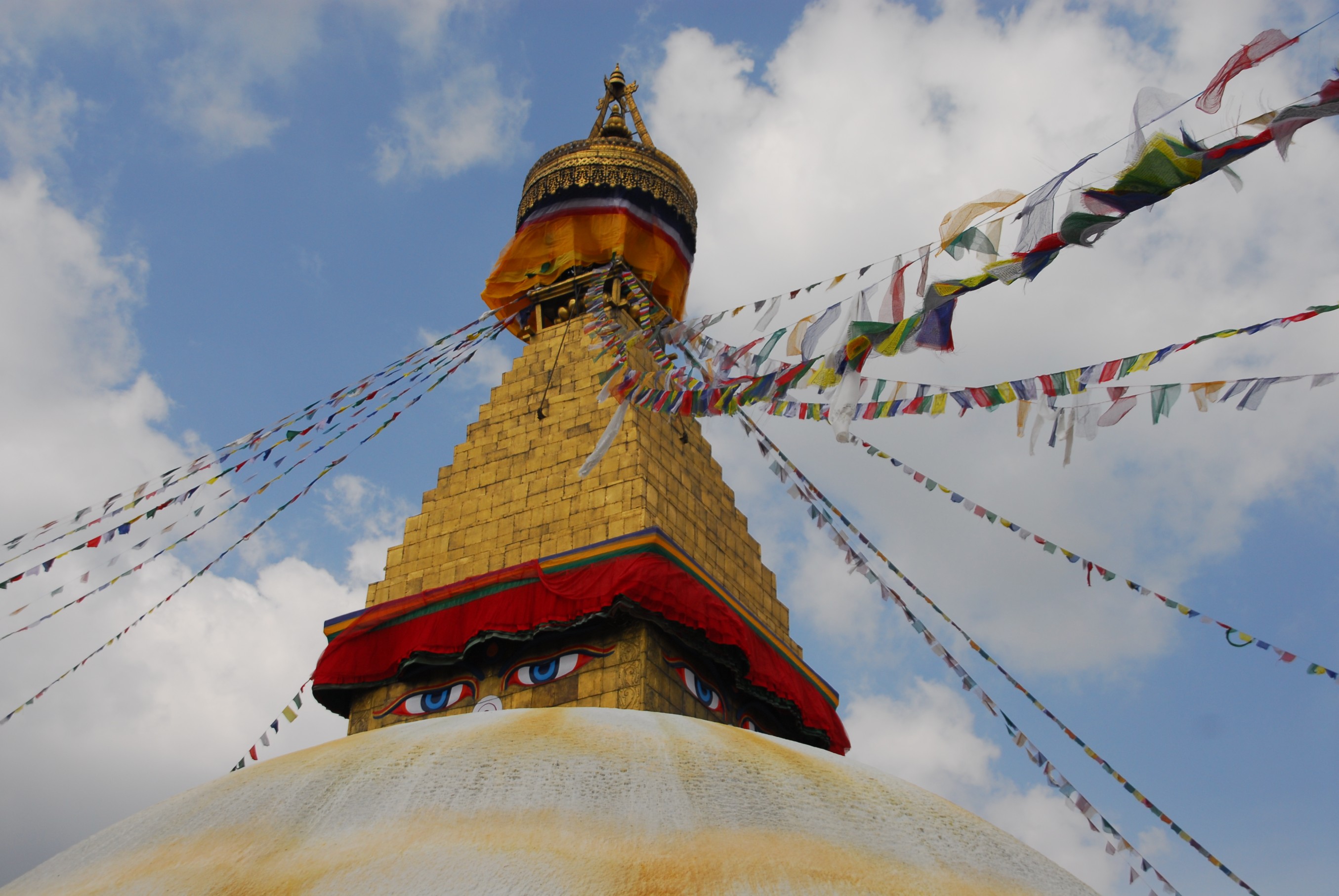
Boudhanath's construction was likely influenced by the Tibetan-style stupa design, which has a characteristic hemispherical dome, a central spire, and a square base adorned with large, painted eyes that are said to represent the omnipresent gaze of the Buddha. The architectural design of Boudhanath is a blend of traditional Buddhist elements with local artistic styles, making it a unique and visually captivating monument.
The stupa's creation is often attributed to King Manadeva, a ruler who is said to have built it as an act of devotion and as a place for the local people to gather and practice their faith.
The Stupa Through the Ages
Over the centuries, Boudhanath Stupa has undergone various renovations and reconstructions. The stupa’s most notable renovation occurred in the 14th century under the reign of King Trisong Detsen, who had a profound influence on the development of Tibetan Buddhism. However, it wasn’t until the 1950s that Boudhanath Stupa received significant international attention, particularly as the political climate in Tibet led to an influx of Tibetan refugees into Nepal.
In the 1950s and 1960s, the Boudhanath area became home to a large Tibetan community, many of whom sought refuge in Nepal after the Chinese occupation of Tibet. The influx of Tibetan refugees brought with it a revival of Tibetan Buddhism, and Boudhanath became a focal point for their religious practices. The Tibetan influence on the stupa is evident in the many monasteries, shrines, and prayer wheels that surround the stupa, as well as the vibrant Buddhist culture that flourishes in the area.
In the 21st century, Boudhanath Stupa remains a popular destination for tourists, pilgrims, and locals alike. Its spiritual significance continues to draw people from all walks of life, making it a beacon of peace and tranquility in a busy and bustling world.
The Spiritual Significance of Boudhanath Stupa
A Center for Tibetan Buddhism
Boudhanath Stupa is one of the most important Tibetan Buddhist sites outside of Tibet. The stupa’s location in Nepal, which has a long history of Buddhism, makes it a key focal point for Tibetan spiritual practice. The stupa's design and layout are in harmony with Buddhist cosmology, and it is said that each element of the stupa has a symbolic meaning that relates to the path of enlightenment.
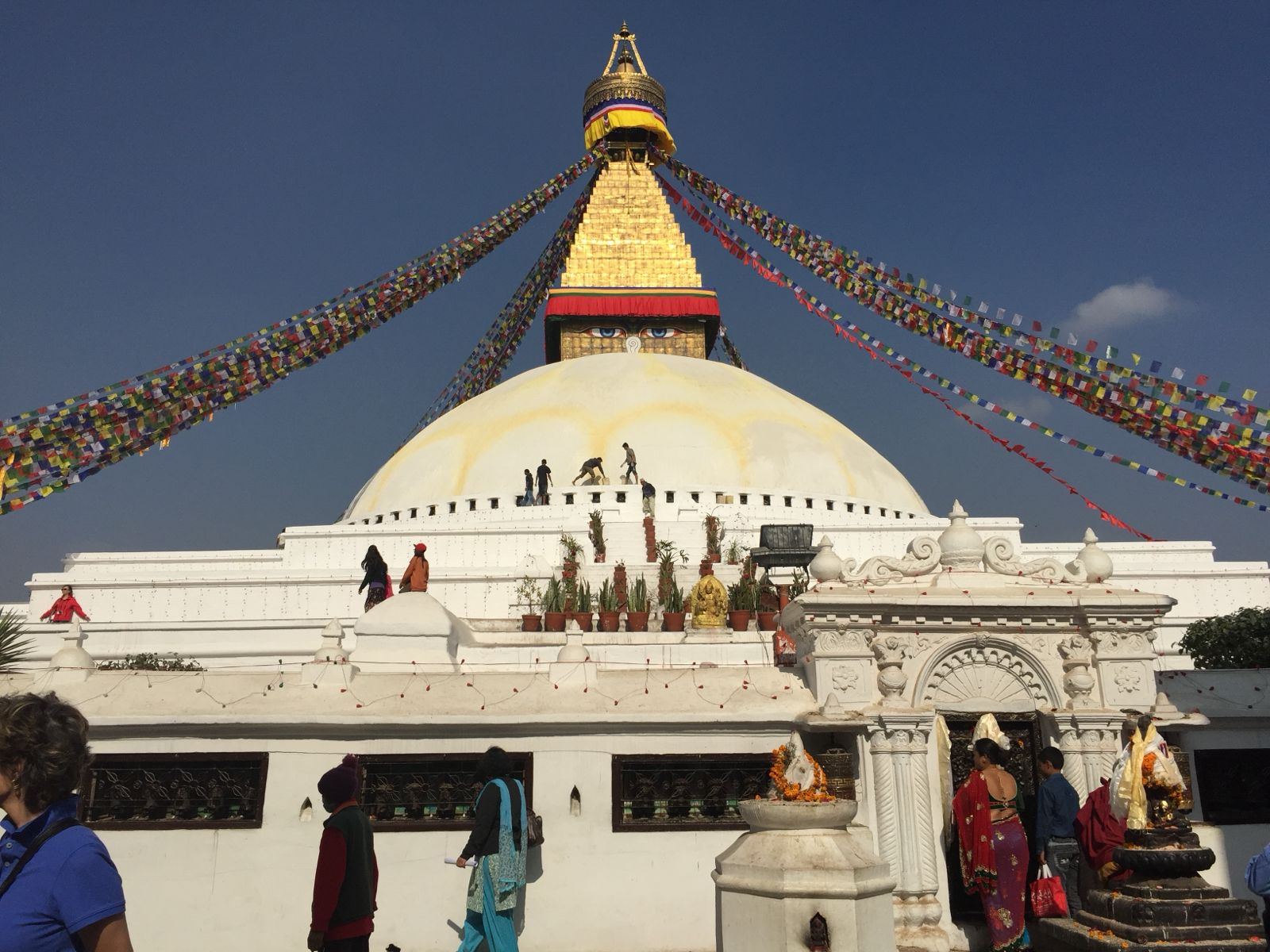
At the heart of Boudhanath is the large, dome-shaped stupa, which is said to represent the Buddha's teachings. Surrounding the stupa are smaller shrines, prayer wheels, and other religious artifacts that enhance the spiritual atmosphere of the site. The large prayer wheels are inscribed with mantras, and pilgrims often walk around the stupa in a clockwise direction, turning the wheels as they recite prayers or meditate. This practice is believed to accumulate merit and purify the mind.
The stupa’s significance is also closely tied to the teachings of Vajrayana Buddhism, the form of Buddhism practiced by Tibetans. The stupa is considered a representation of the Buddha’s enlightened mind and serves as a symbol of the cosmic axis that connects the realms of existence with the ultimate state of Nirvana. Pilgrims come to Boudhanath to circumambulate the stupa, meditate, and pray for spiritual insight, healing, and protection from negative forces.
A Symbol of Peace and Harmony
Boudhanath Stupa has also become a symbol of peace and harmony, not just for Buddhists but for people of all faiths. The stupa’s serene presence, coupled with the sight of thousands of colorful prayer flags fluttering in the wind, creates an atmosphere of calm and reflection. For many, Boudhanath represents the universal quest for peace, wisdom, and compassion, transcending religious and cultural boundaries.
In recent years, the stupa has gained recognition as a symbol of religious tolerance and unity. It stands as a reminder of the enduring power of faith, love, and peace in a world that often seems divided by conflict and strife. The stupa’s message of universal compassion and harmony has resonated with people from all over the world, making it a truly global symbol of spirituality and hope.
The Architecture of Boudhanath Stupa
The Structure and Design
The Boudhanath Stupa is an architectural marvel that showcases the intricate beauty of Tibetan Buddhist design. The stupa’s most distinctive feature is its large, circular dome, which is said to represent the universe and the Buddha’s enlightened mind. The dome is topped by a spire, which symbolizes the path to enlightenment, and is adorned with a series of thirteen steps that represent the stages of spiritual awakening.
The central part of the stupa is the massive white dome, which is surrounded by a series of smaller stupas and shrines. The base of the stupa is square in shape, with four large Buddha eyes painted on each of the four sides of the square. The Buddha eyes, also known as the “Wisdom Eyes,” symbolize the Buddha’s all-seeing nature and represent the ability to perceive the truth beyond ordinary sight. In addition to the eyes, the stupa is adorned with a third eye, which is said to symbolize spiritual insight and the ability to see beyond the material world.
At the base of the stupa, there is a series of prayer wheels, each containing sacred mantras. Pilgrims who visit Boudhanath often spin these prayer wheels as they walk around the stupa, creating an atmosphere of continuous prayer and meditation. The stupa’s layout and design are carefully planned to create a harmonious environment that supports spiritual practice and reflection.
The Prayer Flags
One of the most striking features of Boudhanath Stupa is the profusion of colorful prayer flags that adorn the site. These flags are typically inscribed with mantras and prayers, and they are believed to spread blessings, peace, and good fortune to all who come into contact with them. The fluttering prayer flags create a visual and auditory tapestry of color and sound, adding to the site’s spiritual ambiance.
The prayer flags are often tied to the large poles that surround the stupa, where they catch the wind and flutter in all directions. According to Tibetan tradition, the wind carries the prayers written on the flags to the heavens, where they are received by the gods and spirits. This practice is seen as a way of sharing blessings with the entire world, and it further enhances the sense of interconnectedness that pervades the stupa.
The Cultural Impact of Boudhanath
A Hub for Pilgrims and Monks
Boudhanath Stupa is not only a significant religious site but also a cultural hub for Tibetans and Buddhists worldwide. The stupa is surrounded by a vibrant community of Tibetan monasteries, temples, and shops that cater to the needs of pilgrims and visitors. The area is home to many monks, nuns, and spiritual practitioners who engage in meditation, teachings, and ceremonies.
Boudhanath also hosts various festivals and religious events throughout the year, the most prominent of which is the annual Buddha Jayanti celebration, marking the birth, enlightenment, and death of the Buddha. During these festivals, the stupa is decorated with lights, flowers, and offerings, creating a festive atmosphere that attracts thousands of pilgrims from across the globe.
The Tibetan community in Boudhanath is an integral part of the area’s cultural fabric, and the stupa is a focal point for their religious practices and social gatherings. The Tibetan New Year (Losar) is also celebrated with great enthusiasm, with special rituals and prayers taking place around the stupa. These events provide an opportunity for people to connect with their spiritual heritage and share their devotion to the Buddha.
A Popular Tourist Destination
In recent decades, Boudhanath Stupa has become one of Nepal's top tourist destinations. The stupa’s unique beauty, historical significance, and spiritual atmosphere attract travelers from all corners of the world. Visitors can explore the surrounding area, which is dotted with monasteries, shops selling religious artifacts, and cafes offering Tibetan food. The stupa is often included in cultural and spiritual tours of Kathmandu, and it offers a serene and contemplative environment for those seeking peace and reflection.
Conslusion:
In conclusion, Boudhanath Stupa is not only an architectural marvel but also a deeply spiritual site with immense cultural significance, especially for Tibetan Buddhists. Its iconic structure, with its large dome, intricate designs, and the all-seeing eyes of the Buddha, symbolizes the journey to enlightenment and serves as a focal point for prayer and meditation. The surrounding area, with its vibrant Tibetan community, monasteries, and cultural richness, makes Boudhanath a unique blend of history, religion, and tradition.
Visiting Boudhanath offers not just an opportunity to witness a stunning landmark, but also a chance to immerse oneself in the peaceful, meditative atmosphere that reflects the essence of Buddhist philosophy and practice. Whether for spiritual growth, cultural exploration, or simple reflection, Boudhanath is a profound and memorable experience for anyone who visits.

Gallery